Twelve Months in Harrisburg, Twelve Years in Washington: The Speed Gap That Defines American Mercy
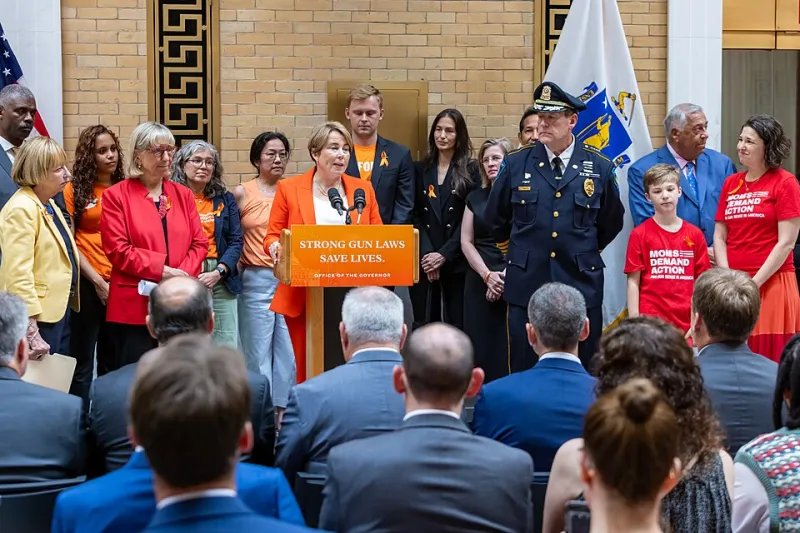
Photo: Joshua Qualls (Massachusetts Governor’s Press Office), Public domain, via Wikimedia Commons
In Harrisburg, a woman convicted of a nonviolent drug offense a generation ago can file a pardon petition, sit before a board, and receive a decision within roughly a year. In Nebraska, the Board of Pardons meets on a regular schedule, works through its docket, and gives applicants something the federal system cannot: an answer. In Washington, D.C., the same petition can gather dust for a decade while the Office of the Pardon Attorney accumulates a backlog now approaching fifty thousand cases.
This is not a scheduling problem. It is a justice problem, and it is time we named it as such.
What Speed Looks Like When States Take Mercy Seriously
Pennsylvania's Board of Pardons has become the national benchmark not because its governors are sentimental, but because the process is engineered for throughput. Public hearings occur on a fixed calendar. Decisions follow. Applicants know where they stand. Nebraska operates on a similar principle: a constitutionally mandated board, a regular meeting rhythm, and a docket that actually moves.
The results are measurable. A granted pardon in these states restores voting rights, opens occupational licensing doors, and clears paths to employment — often within eighteen to twenty-four months of filing. The economic ripple effects are real: steadier jobs, higher tax contributions, reduced reliance on public assistance. Mercy, delivered promptly, pays for itself.
The Federal Counterexample
Now contrast the federal system. The Constitution grants the president the broadest clemency power in the democratic world — no board approval, no legislative override. And yet the Office of the Pardon Attorney processes petitions at a pace that would embarrass a DMV. Petitioners wait years merely for acknowledgment. Many die waiting. The odds of a grant hover near one percent of decisions on the merits, and the petitions that succeed tend to be the ones with political visibility rather than the ones with the strongest claims.
Delay, in this context, is not neutral. Every year of silence is a year a petitioner cannot get licensed, cannot pass a background check cleanly, cannot tell an employer the truth without penalty. Slow denial and fast denial are both denials — but slow mercy is a distinct cruelty, because it suspends a life in permanent anticipation.
A Statutory Deadline Is Not Radical
Critics will say Congress cannot dictate how the president exercises a constitutional power. That objection overstates the problem. Congress routinely structures discretionary decisions — with filing windows, review standards, and reporting requirements — without offending the separation of powers. A clemency reform bill could require the Department of Justice to publish quarterly backlog data, complete investigations within a defined window (eighteen months is a reasonable start), and issue written decisions with stated reasons for every petition filed after enactment.
The president would remain free to grant or deny as he sees fit. What he would lose is the ability to do nothing — quietly, indefinitely, and without consequence. Sunlight and deadlines do not diminish the pardon power; they restore its legitimacy.
Speed Is a Form of Justice
We accept this premise everywhere else in American law. The Sixth Amendment guarantees a speedy trial precisely because we understand that indefinite detention without resolution is itself a punishment. The same logic applies to clemency. A pardon delayed past the point of economic ruin, family estrangement, or death is not a pardon at all — it is a rejection delivered slowly.
The states have shown what is possible. Governors in Pennsylvania, Nebraska, and elsewhere have proven that a functioning pardon system can be both rigorous and prompt. The federal government has no excuse except habit and neglect. Justice that arrives on a decade's timescale is not justice delayed. It is, in the oldest phrase in our legal vocabulary, justice denied — and fifty thousand Americans are living inside that denial right now.